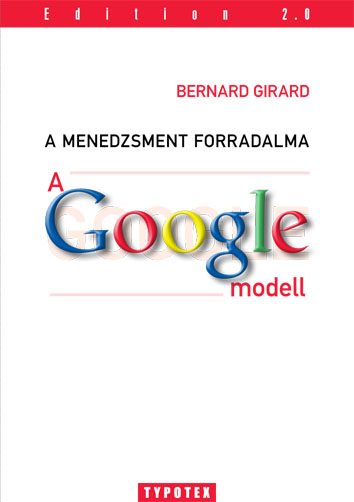

Book Review: The Google Way by Bernard Girard
The Google Way is one of the best books I've read on the subject,
and probably won't be bested until the co-founders write one themselves,
detailing their algorithms.
The book begins by reminding us of how recent Google's contributions are - as
of 11/97, only one of the top four commercial search engines which has found
itself within the top ten responses in response to a search for its name. There
was just too much junk returned. Yahoo was probably the best - it employed
specialists called "ontologists" to check the relevance of key words
submitted when a new site was submitted. Another (DirectHit) classified sites
according to their cumulative use (Lycos and Hotbot still do). However, this
method was vulnerable to distortion due to having several pages open simultaneously
(but unviewed), as well to cheating via short programs designed to boost
various sites.
Google counts the number of links from a specific site to other pages. Links
coming from pages cited often are weighted more heavily. Google also considers
the distance between words when a query contains several. It also gives greater
value to links from sites with many incoming links and few outgoing links.
One of the main reasons Silicon Valley flourished in innovation vs. Rte. 128 in Massachusetts, per
Girard, is that California bans restrictive non-compete clauses in employment
contracts.
Google conducted a Dutch auction for its initial IPO, freezing out the
high-priced underwriters and the games played "low-balling" the
initial price. Girard, however, ended up confusing himself trying to describe
the process.
Google ads are limited to 95 words, without banners or graphics. Sales and
placement are automated, eliminating the need for sales representatives.
Bidders select the maximum they're willing to pay for a key word; priority is
given to whomever bids highest, but at the next lower price. By assigning
advertisers higher positions based both on what they pay and the effectiveness
of their ads. Google gives extra motivation for advertisers to improve their ads
(and Google's effectiveness). Google also provides a means for advertisers to
test various wordings. Partly as a result, keyword search prices on many terms
rose 40-60% in 2006.
Google doesn't create any material - thus, it generates no conflict over ad placement
vs. links to sites that might criticize whatever is being advertised, and the
process can be automated.
Google search volume is boosted by allowing free Google search engines to be
added to the pages of site builders (they get part of the click revenue),
making Google search itself free, providing added services such as GMail,
Google Earth, Google Notes, Google Trends, Google Metrics, etc. to help keep
users within a click of Google revenue sources. Finally, Google is also
pressing ubiquity of its services by providing software for cell-phones,
GPS-connected Google Maps, major home appliances, etc.
By lowering search costs and increasing the availability of products, Google
can substantially increase collective market share of niche products.
Google hiring decisions focus on getting the best from the best graduate
schools, and sponsoring contests that attract the best minds. About 8
interviews (focusing on real-world Google problems) are required. Until
recently, it had about one HR person per 14 employees. However, now that its
hiring binge is over, this is being cut to something closer to an industry norm
of about 1:100.
Finally, Girard tells readers that Google uses small teams - no more than six.
This helps ensure the group is given a defined task that it accomplishable
within a relatively short time.
My only wish is that Girard went on to explain the business model, if any,
behind Google's massive and controversial book copying effort.
5 Stars
The Google Way: How One Company is Revolutionizing Management as We Know It (No Starch Press/ Apr 2009) by Bernard Girard